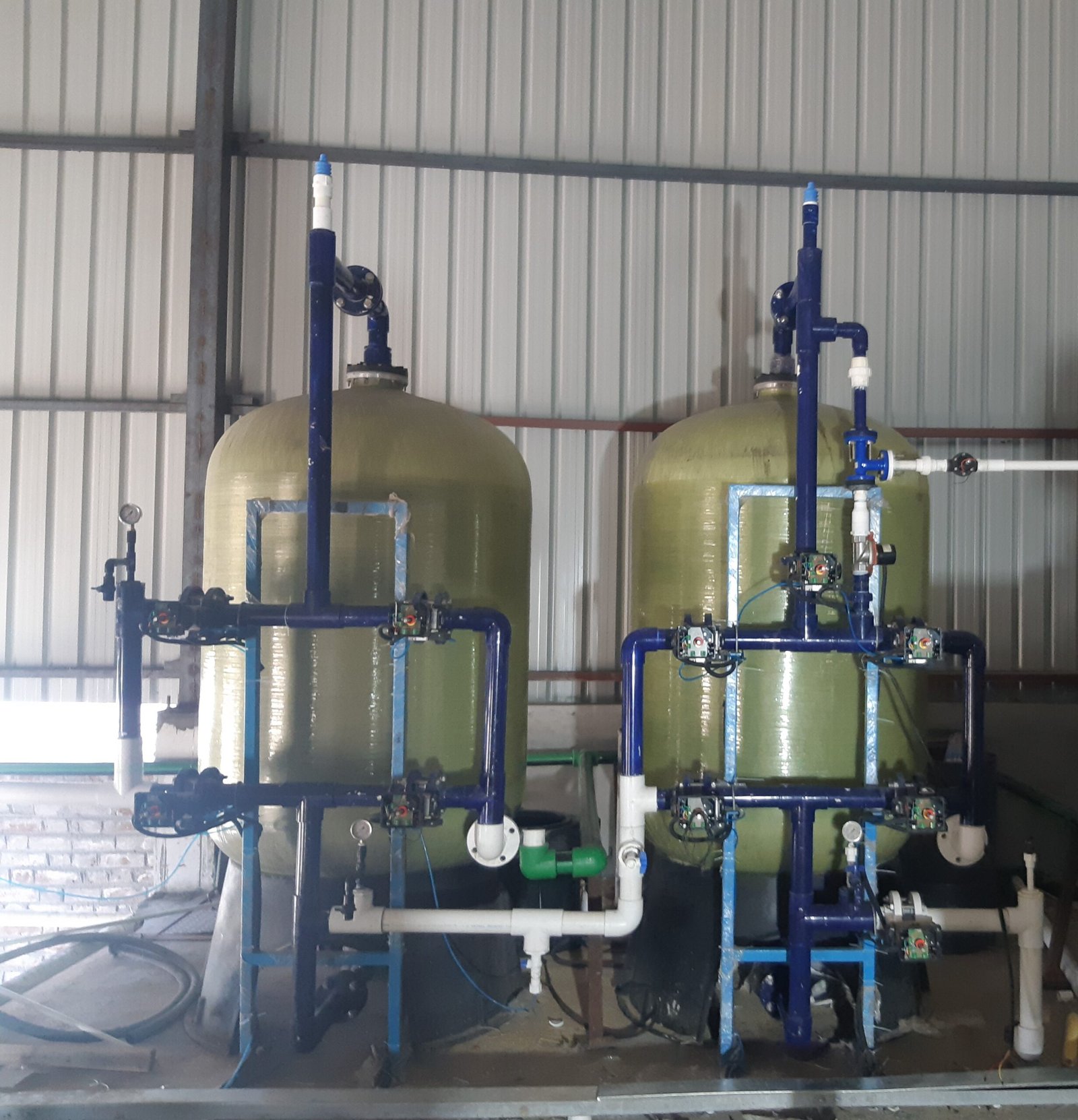
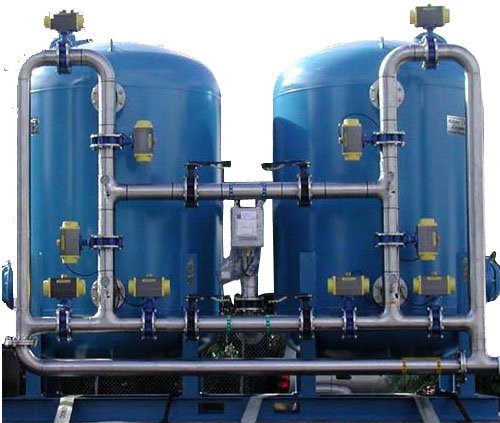
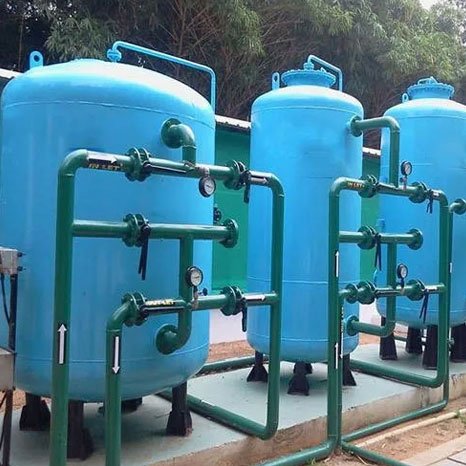
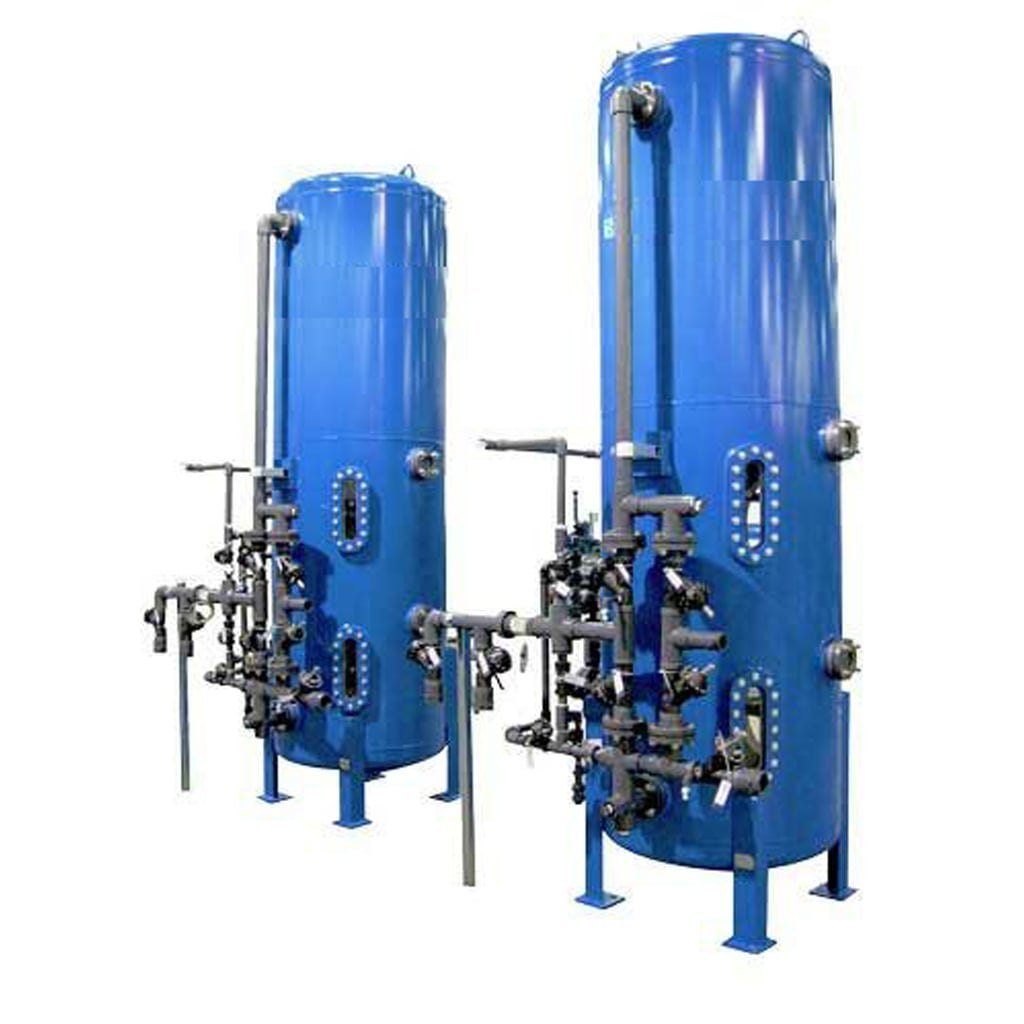
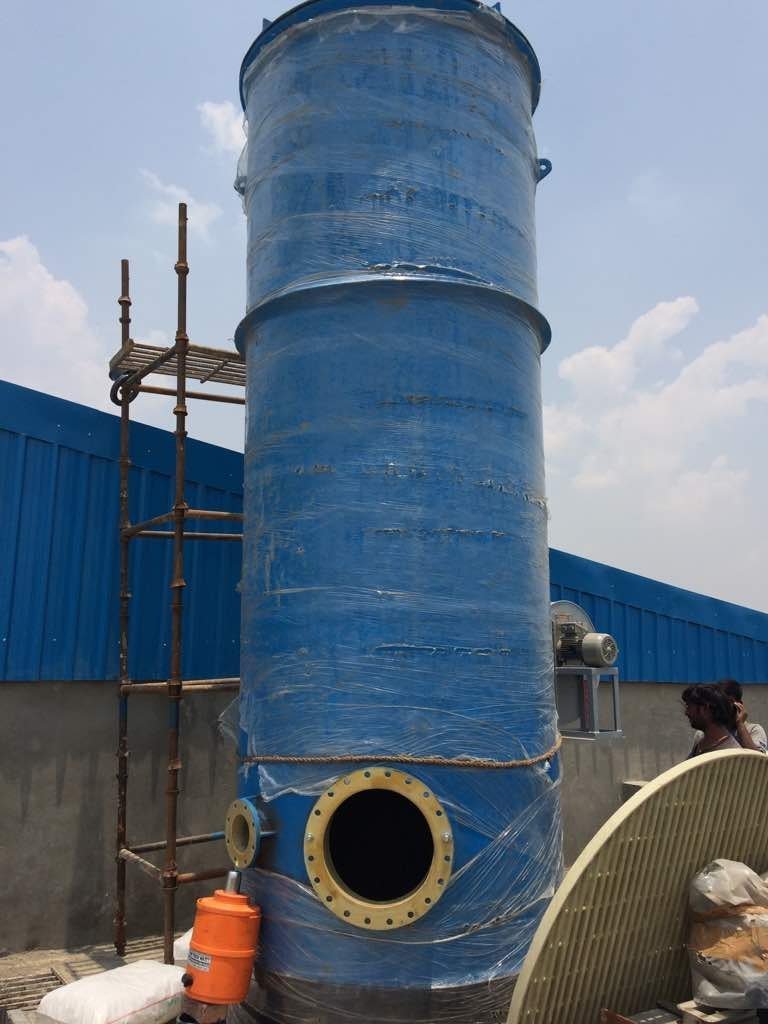
The Water Softener Plant is designed to remove hardness (calcium and magnesium ions) from water through the ion exchange process, preventing scaling and improving the efficiency of downstream equipment. It is widely used in boiler feed, process water, and utility applications. Key Benefits: Easy regeneration, long resin life, and consistent soft water output.
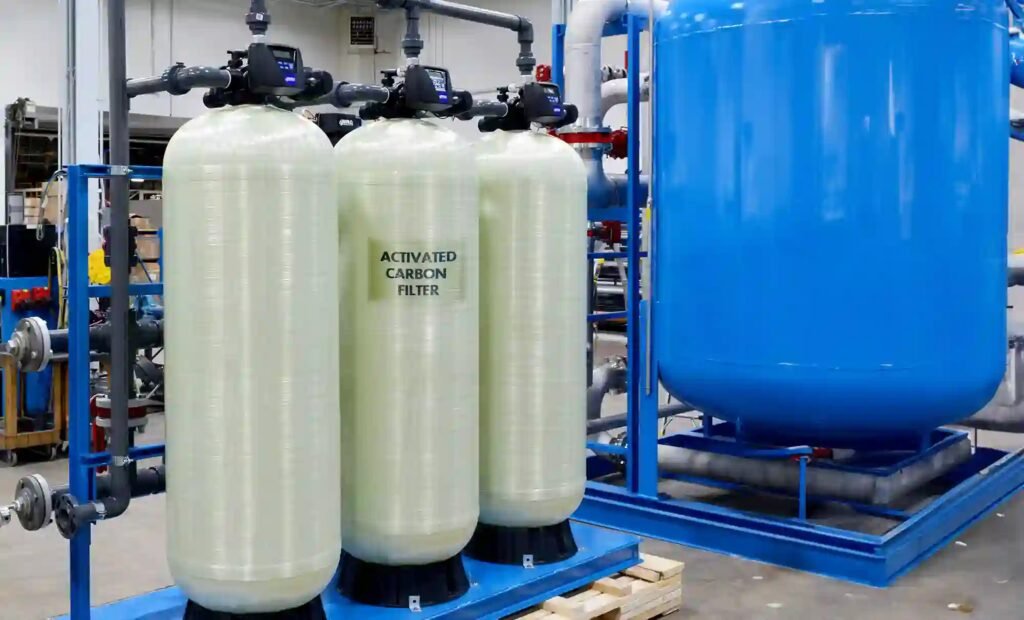
ACTIVATED CARBON FILTER (ACF)
The Activated Carbon Filter efficiently removes chlorine, color, odor, and organic impurities from water through the process of adsorption. It enhances water taste and quality, making it suitable for industrial, domestic, and drinking water systems.
Key Benefits: High chlorine absorption capacity, minimal pressure drop, and low maintenance.
PRESSURE SAND FILTER (PSF)
The Pressure Sand Filter is designed for the removal of suspended solids, turbidity, and fine particulates from raw or treated water. It uses multiple layers of graded sand media for effective filtration. Commonly used as a pre-treatment step before softeners, RO systems, or process water applications.
Key Benefits: High flow rate, simple operation, and durable construction.
MULTIGRADE FILTER (MGF)
The Multigrade Filter is an advanced version of the sand filter that uses different layers of media (gravel, sand, anthracite, etc.) to achieve high filtration efficiency and clarity. It provides low pressure loss and is ideal for large-scale water purification systems.
Key Benefits: Compact design, high dirt-holding capacity, and consistent filtrate quality.
MIXED BED (MB) UNIT
The Mixed Bed Unit is a polishing system that removes trace ions and dissolved solids from demineralized or reverse osmosis-treated water. It consists of cation and anion exchange resins mixed together for final purification, delivering ultra-pure water.
Key Benefits: Achieves high purity levels (conductivity < 1 µS/cm), easy regeneration, and compact design.
DEGASSER TOWER (DG)
The Degasser Tower removes carbon dioxide and other dissolved gases from demineralized water using a counter-current air stripping process. It enhances the performance of downstream ion exchange systems and prevents corrosion. Key Benefits: Energy-efficient operation, non-corrosive construction, and improved water quality for industrial use.